A Different Perspective on the Female Cycle: Exploring Hormonal Patterns with Mira
Our hormones tell a story that cannot always be captured by a calendar or a single laboratory result.
Our Bodies Aren't Calendars
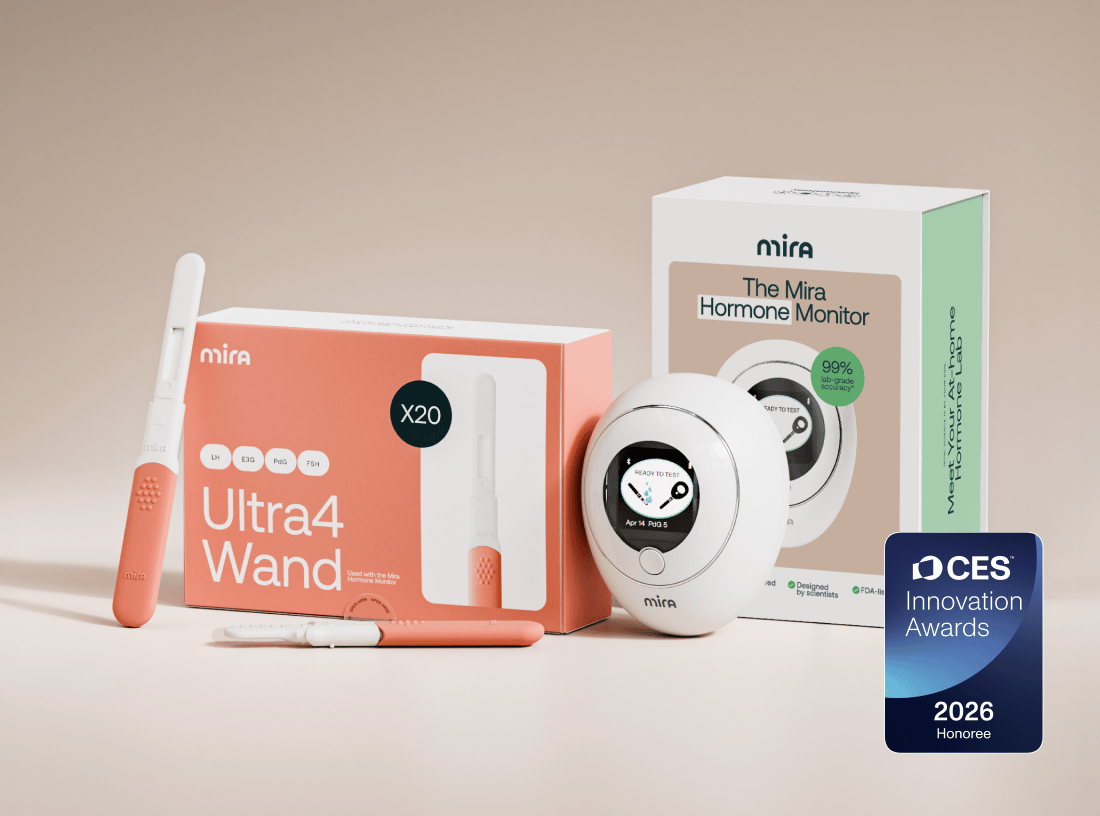
Recently, while attending a longevity medicine webinar, I discovered an at-home hormone monitoring device called Mira. As I explored its capabilities, I returned to a question I've been asking for more than a decade: Are we missing part of the story when we evaluate women's hormones?
We're often taught to understand the menstrual cycle as a predictable 28-day process, with ovulation occurring around day 14. But our hormonal rhythms don't always follow a textbook.
My own curiosity deepened when I became pregnant during my menstrual period. Later, I noticed multiple luteinizing hormone (LH) surges within a single cycle, making it difficult to identify when I was actually ovulating. Changes in my thyroid and endocrine health also made basal body temperature tracking less reliable.
I wanted to understand what my body was doing rather than simply predicting what it should be doing. When Mira offered me a free trial, I enthusiastically accepted.
The Limitations of a Hormonal Snapshot
Conventional hormone evaluation often involves bloodwork performed on specific days of the menstrual cycle. Day-3 testing can help evaluate early follicular hormones such as FSH and estradiol, while progesterone is often checked around days 19–21 to look for evidence of ovulation.
These tests have value, but timing matters. Consider a woman with a 42-day cycle who ovulates around day 28. A progesterone test on day 21 could appear low simply because ovulation hasn't happened yet. Mid-luteal progesterone is generally better timed about seven days before the next anticipated period.
Many women also use inexpensive urinary LH test strips to identify their fertile window. These can detect an LH surge, but a positive strip does not prove an egg was released. Multiple LH surges, variable baseline LH, or an unexpected ovulation date can make interpretation more complicated. And a strip alone does not show the estrogen rise before ovulation or the progesterone shift afterward.
The same question of timing and context matters when evaluating bioidentical hormone replacement therapy (bHRT). Depending on the formulation, administration route, and clinical question, a single measurement may not tell the full story of hormone exposure or symptom response.
What Does Mira Actually Measure?
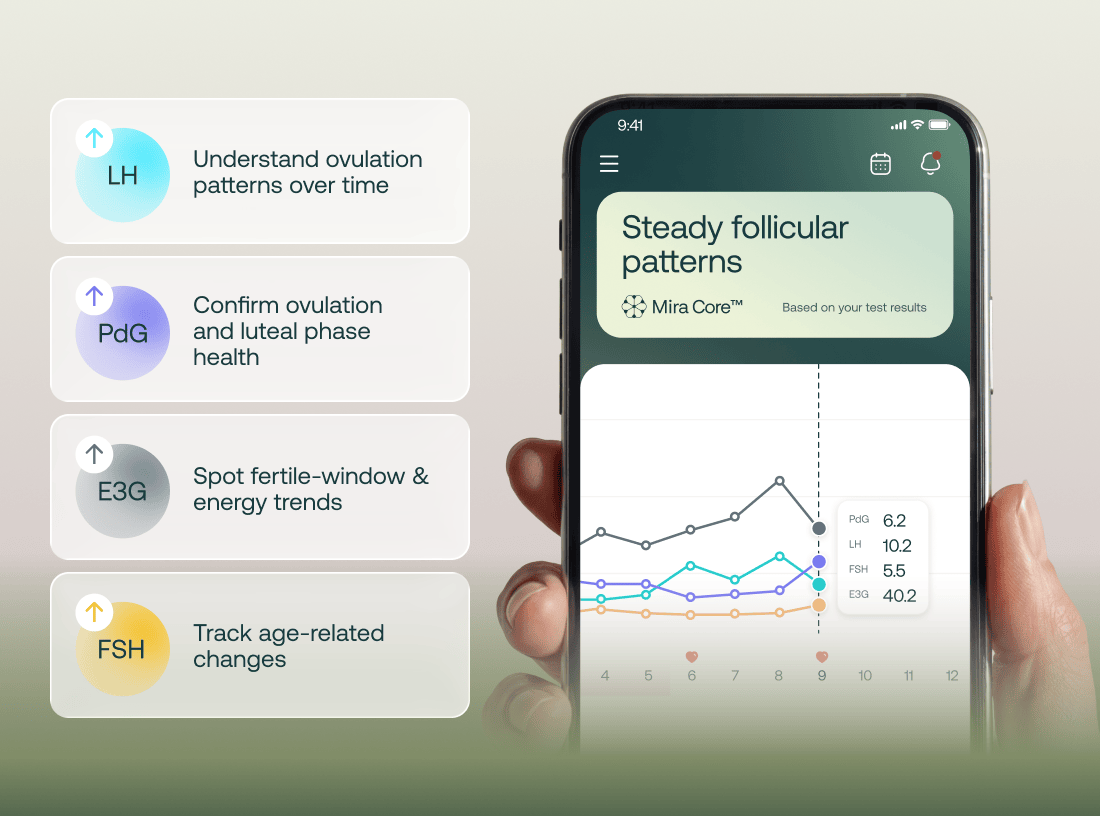
Mira uses urine testing wands and a handheld analyzer to show quantitative hormone trends rather than only a positive or negative ovulation prediction. Depending on the wands, it measures:
- E3G (estrone-3-glucuronide): an estrogen metabolite that typically rises as a follicle develops, helping identify the approaching fertile window.
- LH (luteinizing hormone): the hormone surge that generally precedes ovulation; a surge alone doesn't confirm ovulation.
- PdG (pregnanediol glucuronide): a progesterone metabolite that typically rises after ovulation and can provide supporting evidence of the postovulatory shift.
- FSH (follicle-stimulating hormone): a hormone involved in follicular development that may offer context about changing ovarian function.
These patterns may be interesting for women trying to conceive, experiencing irregular cycles, or navigating perimenopause. They can also prompt questions about ovulatory dysfunction, including in PCOS, but the device cannot independently diagnose these conditions or determine appropriate bHRT dosing.
What Does the Research Say?
Research on quantitative at-home monitoring is encouraging for estimating ovulation timing. A study comparing Mira hormone measurements with ultrasound-confirmed ovulation reported that 96% of confirmed ovulations fell within one day of the detected LH peak in the analyzed ovulatory cycles. The study was relatively small, and results should not automatically be generalized to women with more complex endocrine conditions.
Tracking a hormonal change is not the same as identifying its cause.
When Is More Comprehensive Testing Helpful?
Mira helps us observe patterns over time. Sometimes the clinical question calls for a broader investigation. In my practice, I also value DUTCH (Dried Urine Test for Comprehensive Hormones), which measures a wider selection of hormones and their metabolites using timed dried urine samples.
Depending on the panel, DUTCH can explore:
- Estrogen metabolites: patterns of estrogen metabolism and conjugation.
- Progesterone metabolites: additional information about progesterone metabolism.
- Androgens: testosterone, DHEA, and related metabolites.
- Cortisol and cortisone: daily patterns and metabolism of these hormones.
- Other markers: selected panels include melatonin metabolites and organic acids.
I use relationships among these measurements, together with symptoms, medical history, and other findings, to recognize patterns, explore contributing factors, and develop individualized care protocols. For women considering or using bHRT, test selection also depends on the specific therapy and clinical question; metabolite results alone cannot establish an appropriate dose or endometrial safety.
Mira, DUTCH, and conventional bloodwork offer different perspectives. The goal is not to collect every possible number, but to choose information that can meaningfully guide care.
More Information—But Who Is Interpreting It?
At-home testing makes hormone tracking more accessible and can inspire better questions. But a value outside an expected range doesn't automatically indicate disease, and a normal-looking result doesn't rule out an underlying problem. Hormonal patterns are influenced by age, medications, thyroid and metabolic health, reproductive stage, and other factors.
Without context, more data can create anxiety or false reassurance. Symptoms and persistent changes deserve attention and, when appropriate, professional evaluation.
Learning to Listen to Our Bodies
What excites me most about Mira is the invitation to be curious about our own hormonal rhythms. Not every fluctuation needs correction, but meaningful symptoms and unexpected changes deserve to be heard.
Your body is not a textbook. Its patterns are worth understanding, and its wisdom is worth listening to.
If you're curious about your cycle, navigating hormonal changes, or wondering whether more comprehensive testing might help, I'd love to have that conversation with you.
Curious about Mira or advanced hormone testing?
Readers can use code 53SACREDSOIL20 for 20% off Mira. Patients who schedule with me can access a 30% discount through my provider platform. We can also discuss whether hormone tracking or more comprehensive evaluation fits your goals.
Schedule a conversationResearch & Further Reading
- American Society for Reproductive Medicine — Clinical guidance on fertility evaluation and ovulation.
- DUTCH Hormone Testing — Descriptions of available hormone and metabolite panels (manufacturer resource).
- Mira — Product information and research resources (manufacturer resource).
Disclosure: I received a complimentary Mira trial and can share reader and provider discounts. I do not earn commissions from purchases made using my discount code. This article reflects my independent educational and clinical perspective.
Medical disclaimer: This article is educational and does not replace individualized medical evaluation. At-home hormone monitoring is not a standalone diagnostic test or contraceptive method.